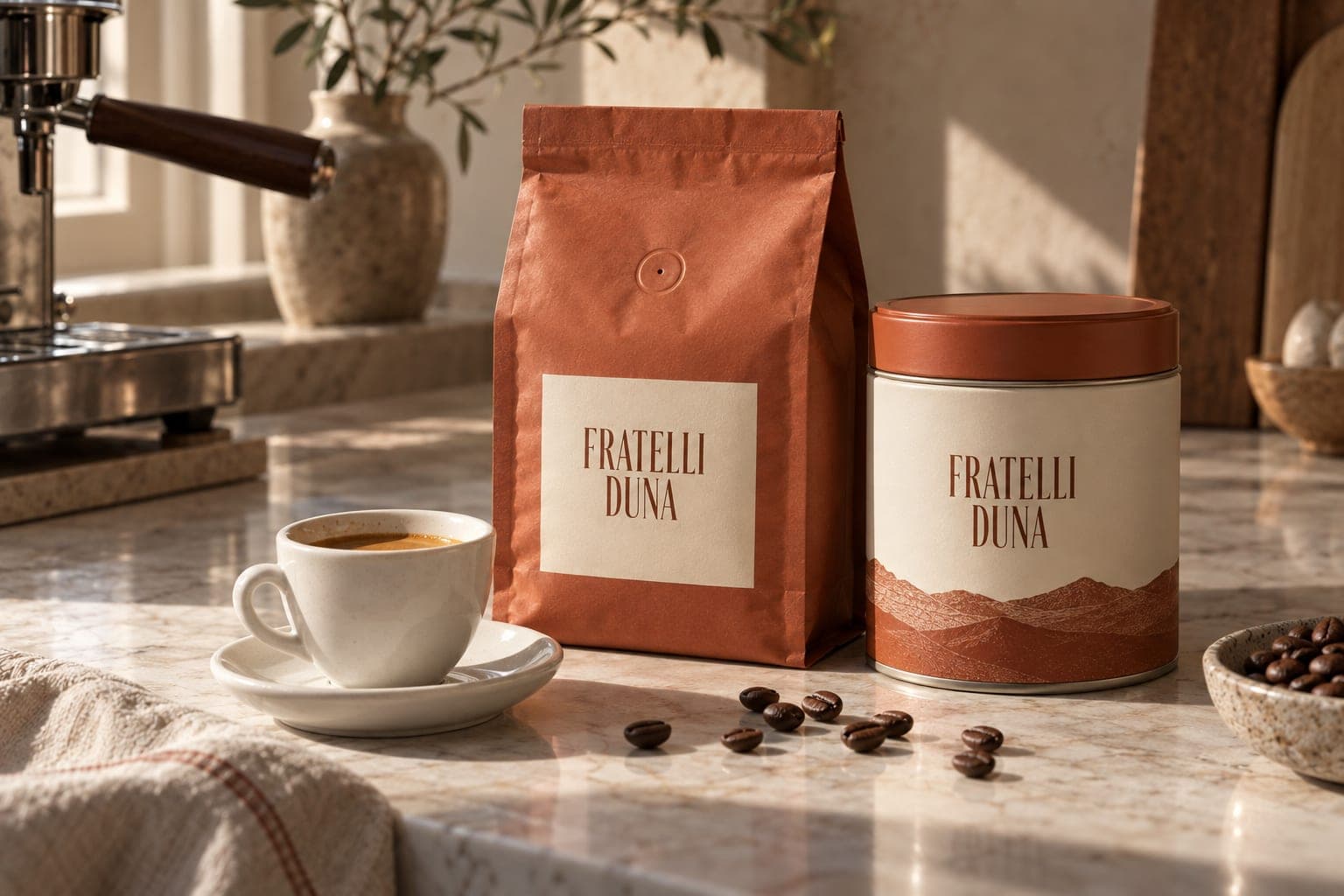
FIG. 01FRATELLI DUNA — ESPRESSO BLEND
CONCEPT STUDY
Fratelli Duna
Is there room for traditional Italian espresso in a market led by third-wave roasters?
- CLIENT
- Fictional brand — concept study
- ORIGIN
- Italy
- CATEGORY
- Espresso
- SCOPE
- Korea Entry Assessment
- YEAR
- 2026
A third-generation espresso roaster in Trieste supplying about 300 bars in Italy, Austria and Slovenia, with a home range in 250g bags and tins.
THE SUMMARY EDITION · IN ENGLISH
01THE QUESTION
Does traditional Italian espresso have a place in Korea's specialty-led coffee market — and should entry be café supply or home-café retail?
FIG. 02SEOUL — AN ESPRESSO BAR
02WHAT WE FOUND
- CONFIRMED
The brand arrives with a clear traditional identity — a third-generation Trieste roaster built on blends and consistency — outside the single-origin language of Korean specialty coffee.1
- INFERENCE
Heritage alone is unlikely to be enough. The brand may be clearer when tradition is tied to repeatable extraction, menu suitability and operating value for bars.
- HYPOTHESIS
Café operators are the first group to test: they can judge extraction, menu fit and supply terms. Home-espresso users are a second, smaller test with the 250g bag.
- HYPOTHESIS
The mid-premium price needs a reason beyond imported status — origin, blend expertise and use value, set against real Korean prices.
03POSITIONS STILL OPEN
We did not pick a position the evidence cannot yet support. These stay open until the tests below separate them.
- 01HYPOTHESIS
Traditional espresso for reliable bars
Position Fratelli Duna as a traditional Italian blend for cafés that need repeatable extraction and suitable performance across espresso and milk-drink menus.
- 02HYPOTHESIS
Italian espresso for home machines
Position the 250g range as a consistent traditional Italian espresso experience for home-machine users aged 30–50.
- 03HYPOTHESIS
One blend across both settings
Connect the bar and home propositions through a repeatable espresso experience, using the family roastery and existing bar-supply experience as proof points.
04WHAT WE COULD NOT ANSWER
- UNKNOWN
Korean demand and actual price ranges for traditional Italian espresso blends, in both 250g and 1kg formats.
- UNKNOWN
Whether café supply or home-café retail has the better economics, adoption and repeat purchase.
- UNKNOWN
What Korean café operators look at when they change coffee supplier.
FIG. 03DETAIL — THE ROAST
05WHAT WE WOULD TEST FIRST
- 01
Run comparative tastings with five to eight café operators, including a real machine-extraction test.
- 02
Build a Korean price and competitor map for 250g and 1kg products against delivered cost and margin.
- 03
Compare two propositions with operators and home users: traditional Italian espresso versus a repeatable blend for bar and home.
- 04
Review importer, labelling and manufacturing-site registration requirements with potential Korean importers.
CONCEPT STUDYFratelli Duna is a fictional brand, invented to show the work. The assessment is real: our standard process, run end to end, with its labels and unknowns left as they came out.
06SOURCES
- 1
The brand's own brief — written for this concept studyFictional brand input, not a market source
NEXT
Mallee & Tide
AUSTRALIA · BODY CARE
NEXT ENTRY
If Korea is your next market, start with what can be known.